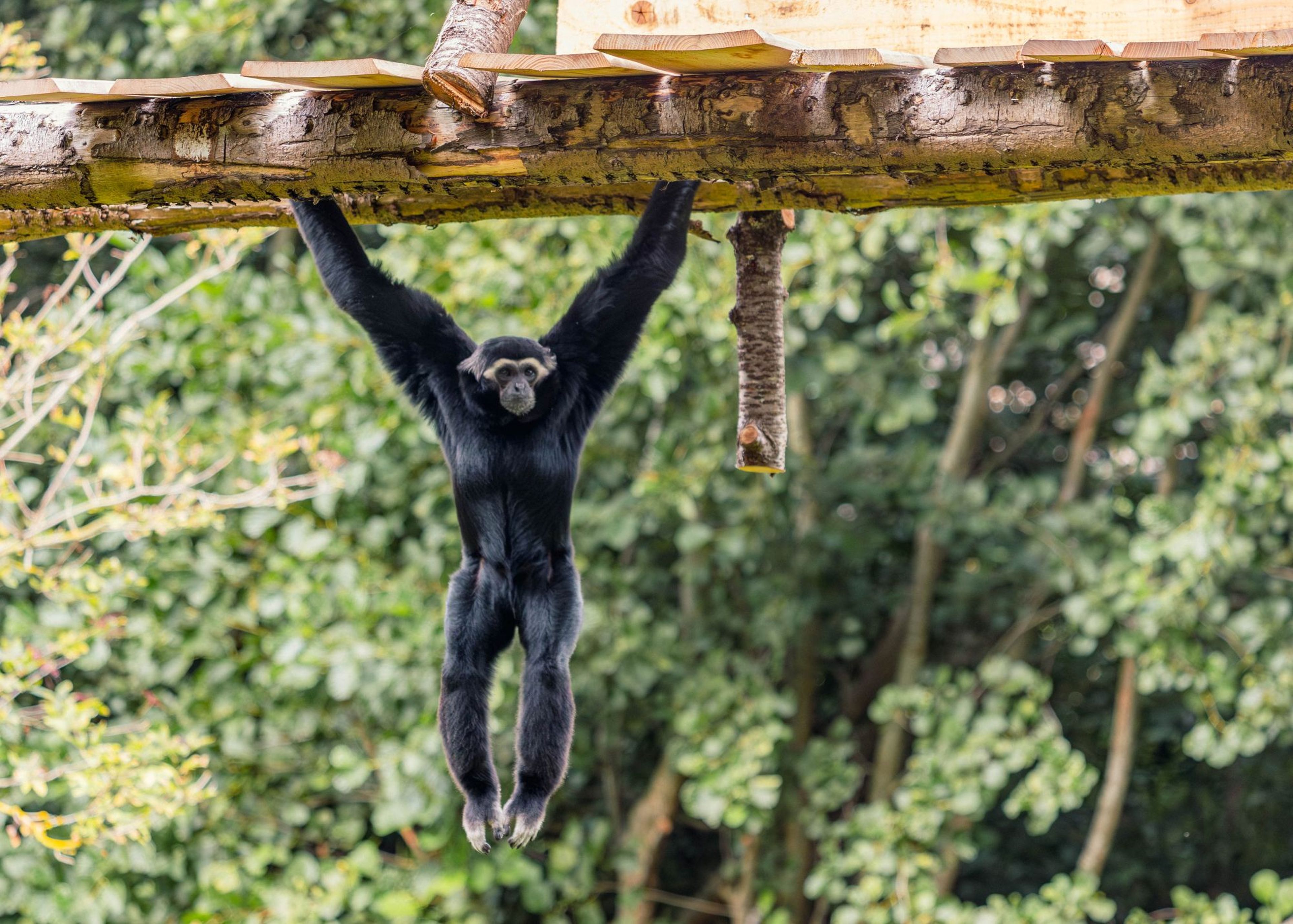
Pileated gibbon
Here at Paignton Zoo we have two groups of pileated gibbons from the same family. At the front of the zoo we have mum Shukdi, dad Hantu and their youngest son, Dao. You can see them swinging through the trees on the first island as you walk into the zoo.
The second group is made of the two eldest sons of Shukdi and Hantu, Sunan and Nimith. They have recently moved to the Ape Centre where you can see them hanging out on the smaller island next to the orangutans.
Class:
Mammals
Order:
Primates
Family:
Hylobatidae
About pileated gibbons
This primate can today be found in tropical forests and dense evergreens, but only in the regions of southeast Thailand and northwest Cambodia, Asia.
Pileated gibbons in the wild are mainly frugivores – most of their diet consists of fruit! However they do also eat leaves and insects.
Gibbons are very agile and can swing through the trees at speeds up to 35mph. These arboreal mammals tend to live in monogamous pairs and form small family groups with their offspring.
Conservation
There is thought to be around 65,000 pileated gibbons remaining in the wild today. Their main threat is habitat loss, with the wild forest they live in being converted into farmland. There are active conservation attempts to survey and increase the species’ numbers, both in the wild and in zoos.
Paignton Zoo is one of only four UK zoos to house pileated gibbons. Our family group are part of the EAZA ex-situ breeding programme for this Endangered primate.